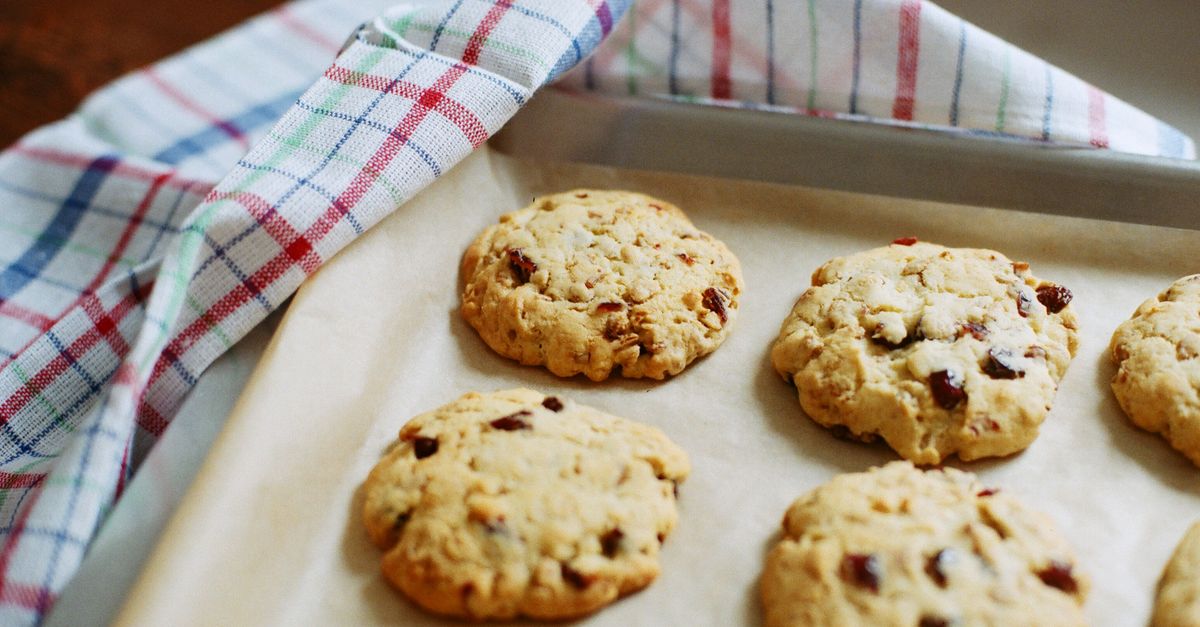
Why Your Homemade Cookies Are Hard, Not Chewy (And The Simple Shifts That Guarantee Soft Perfection Every Time)
Are your homemade cookies consistently turning out like crunchy hockey pucks instead of the soft, melt-in-your-mouth delights you crave? Believe me, I’ve been there. For years, my quest for the perfect chewy cookie felt like a futile battle against a baking curse. Every recipe promised tenderness, but my oven delivered brick-like discs. I meticulously followed instructions, weighed ingredients, and even chilled my dough, only to be met with disappointment. It was enough to make me want to give up on baking cookies altogether.
But here’s the truth: the problem isn’t your oven, your ingredients, or even your baking skills. More often than not, it comes down to a few surprisingly common, yet easily rectifiable, mistakes that almost every home baker makes. What changed everything for me was understanding the science behind chewy versus crunchy and making specific, counter-intuitive shifts in my approach. Once I understood these nuances, my cookies transformed from hard disappointments into consistently soft, rich, and utterly irresistible treats. Now, I rarely bake a batch that isn’t met with rave reviews, and I want to share those game-changing insights with you.
Key Takeaways
- Ensure your butter is softened, not melted, for proper emulsification and a tender crumb.
- Avoid overmixing the dough after adding flour to prevent gluten development, which leads to tough cookies.
- Adjust baking time and oven temperature to prevent overbaking, which is the quickest route to dry, hard cookies.
- Use brown sugar and an extra egg yolk to boost moisture and create that desirable chewy texture.
The Overlooked Enemy: The State of Your Butter
When a recipe calls for “softened butter,” what’s your go-to? Mine used to be tossing it in the microwave for a quick zap. Big mistake. While it might feel softened, what you’re often left with is partially melted butter, and that spells disaster for cookie texture. When butter melts, its water and fat separate. This changes how it emulsifies with the sugar and eggs, leading to a dough that doesn’t hold air as well and results in a denser, harder cookie.
What Actually Works: Your butter should be genuinely softened, but still cool to the touch. It should yield easily to pressure, leaving an indentation, but not be greasy or shiny. Think about the consistency of mayonnaise. This ideal state allows the butter to cream properly with the sugar, creating tiny air pockets that expand during baking, contributing to a lighter, chewier texture. If your butter is too cold, you’ll struggle to cream it, leading to lumps and uneven distribution. If it’s too warm, it won’t hold enough air. The sweet spot, in my experience, is letting it sit on the counter for 30-60 minutes, or until it reaches about 65-68°F (18-20°C). If you’re in a hurry, cut it into small pieces and let it sit for 10-15 minutes, or gently beat it with your mixer on low speed for a minute or two until it reaches the right consistency.
The Gluten Trap: Overmixing Your Dough
I used to think that the more I mixed my cookie dough, the more uniform and perfect it would be. Another common misconception that leads directly to hard cookies! The moment you add flour to your wet ingredients, gluten development begins. Gluten is a protein network that provides structure, and while it’s fantastic for chewy bread, it’s the enemy of tender cookies. The more you mix after the flour is introduced, the more you develop that tough, elastic gluten network.
What Actually Works: Once you add the flour, mix just until the streaks of flour disappear. This usually means about 30 seconds to a minute on low speed, or just a few folds by hand. The dough might still look a little shaggy, and that’s perfectly fine—even desirable. Some recipes, especially those without much liquid, might even benefit from a very light hand-mix at the end. I’ve found that stopping slightly before it looks perfectly smooth is the key. Embrace the slight lumpiness; your future chewy cookies will thank you.
The Overbaking Blunder: The Invisible Moisture Thief
This is perhaps the most insidious culprit of hard cookies. We’re often taught to look for golden-brown edges as a sign of doneness, and while that’s generally true, for chewy cookies, it’s a trap. By the time the edges are deeply golden and the center looks perfectly set, your cookies are likely already overbaked and well on their way to becoming brittle.
What Actually Works: To achieve that soft, chewy interior, you need to pull your cookies from the oven when they still look slightly underbaked in the center. The edges should be just barely set and light golden, but the very middle should still appear a bit soft and perhaps even a little shiny. Remember, cookies continue to cook for a few minutes on the hot baking sheet after they’re removed from the oven. This residual heat, known as carryover cooking, is crucial. For a typical batch, I often shave 1-2 minutes off the recommended baking time. My perfect timing for a standard chocolate chip cookie is often 9 minutes, even if the recipe says 11-12. Transfer them to a wire rack after 5 minutes on the baking sheet to allow them to cool completely without getting soggy bottoms. Trust your gut and the visual cues, not just the timer!
The Sugar Ratio Sweet Spot: Brown Sugar for Chewiness
Many cookie recipes use a mix of granulated sugar and brown sugar, or sometimes just one. The type and ratio of sugar play a significant role in your cookie’s final texture. Granulated sugar tends to make cookies crisper because it melts and spreads more, then recrystallizes into a harder structure. Brown sugar, on the other hand, contains molasses, which is naturally hygroscopic (it attracts and retains moisture).
What Actually Works: If your cookies are consistently hard, consider increasing the proportion of brown sugar in your recipe. A higher ratio of brown sugar to granulated sugar will introduce more moisture into your dough, resulting in a softer, chewier cookie that stays moist longer. For most drop cookies, I aim for a 2:1 or even 3:1 ratio of brown sugar to granulated sugar. For example, if a recipe calls for 1 cup of total sugar, I’d use 2/3 cup brown sugar and 1/3 cup granulated, or even 3/4 cup brown and 1/4 cup granulated. This simple swap is a game-changer for chewiness.
The Egg Yolk Boost: A Secret for Added Tenderness
Eggs are binders in baking, and while whole eggs provide both structure (from the whites) and richness (from the yolks), sometimes you need to tip the scales for maximum chewiness. Egg whites dry out baked goods, contributing to a crispier texture. Egg yolks, however, are almost pure fat and emulsifiers.
What Actually Works: For an extra boost of tenderness and chewiness, I often add an extra egg yolk to my cookie dough. If a recipe calls for one large egg, I’ll use one whole egg plus one extra yolk. If it calls for two eggs, I’ll use two whole eggs plus one extra yolk. This subtle adjustment adds richness and moisture without increasing the liquid content too much, resulting in a wonderfully soft and chewy crumb. It’s a small change with a surprisingly big impact on the final texture.
Frequently Asked Questions
Q: Why do my cookies always come out flat and hard, not soft and chewy?
A: Flatness and hardness often stem from butter that’s too warm, overcreaming the butter and sugar, or overbaking. Ensure your butter is softened but still cool, cream it just until light and fluffy, and pull your cookies from the oven when their centers still look slightly underbaked.
Q: Can I use all brown sugar in my cookie recipe for maximum chewiness?
A: While using a higher ratio of brown sugar significantly boosts chewiness, using all brown sugar might result in cookies that are too soft, dense, and won’t spread quite as much. A balance, typically 2:1 or 3:1 brown sugar to granulated sugar, offers the best texture and spread.
Q: How does chilling cookie dough affect chewiness?
A: Chilling dough is a fantastic technique for flavor development and preventing excessive spread, but its effect on chewiness is indirect. It allows ingredients to hydrate fully and butter to firm up, leading to slightly thicker cookies. Thicker cookies naturally retain more moisture, which can contribute to a chewier texture. I always chill my dough for at least 30 minutes, often overnight.
Q: My recipe calls for unsalted butter. Does using salted butter affect the texture?
A: Not significantly for texture, but it can affect flavor balance. Unsalted butter allows you to control the exact amount of salt in your recipe. If you use salted butter, omit or reduce the added salt in the recipe to avoid overly salty cookies, especially if your goal is a sweet, soft treat.
Q: What’s the ideal temperature to bake cookies for chewiness?
A: Most chewy cookie recipes are baked between 350-375°F (175-190°C). A slightly lower temperature (like 350°F) for a slightly longer time can promote more even baking and a softer center by reducing the risk of the edges browning too quickly while the center remains raw. Always ensure your oven is preheated properly and consider using an oven thermometer for accuracy.
Transforming your cookies from hard and crunchy to perfectly soft and chewy isn’t just about finding the right recipe; it’s about understanding these small, impactful shifts in your technique and ingredients. By paying attention to the state of your butter, avoiding overmixing, mastering your oven timing, and adjusting your sugar and egg ratios, you’ll unlock a world of truly irresistible homemade treats. So, go ahead, try these tips, and prepare to be amazed by the soft, tender results. Happy baking!
Written by Sarah Jenkins
Home budgeting and frugal living
A former community organizer, Sarah brings a knack for finding resourceful solutions to common household challenges.
You Might Also Like
Why Your DIY Furniture Makeover Chips and Peels (And How to Get a Lasting, Pro Finish)
Stop chipping and peeling! Discover the overlooked mistakes in DIY furniture makeovers and pro techniques for a durable, flawless finish that lasts.
Why Your Homemade Cookies Are Flat, Not Puffy (And The Pro Secrets That Guarantee Bakery-Perfect Results Every Time)
Ever wonder why your homemade cookies spread flat instead of staying puffy? Discover the pro secrets to achieve bakery-perfect results.
Why Your Homemade Cookies Are Flat, Not Puffy (And The Pro Secrets That Guarantee Bakery-Perfect Results Every Time)
Tired of flat cookies? Discover the overlooked mistakes in your baking and the pro secrets for perfectly puffy, chewy cookies every time.