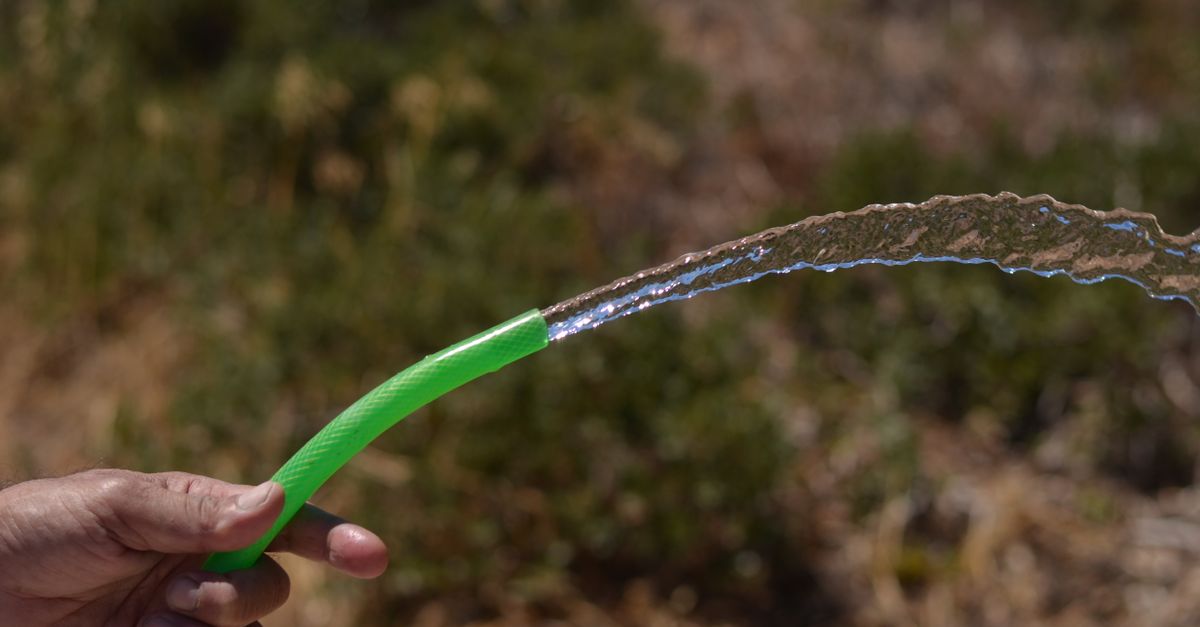
Why Your Garden Hose Always Leaks, Kinks, and Tangles (And What Actually Works for Effortless Watering)
Are you tired of battling your garden hose every time you water? I’ve been there. The seemingly simple act of watering plants often devolves into a wrestling match: the hose springs a leak, kinks at the worst possible moment, or ties itself into a Gordian knot that no amount of tugging can undo. It’s frustrating, time-consuming, and frankly, unnecessary. You just want to water your prize-winning tomatoes or rinse off your patio, not engage in a hydraulic struggle.
For years, I cycled through cheap, flimsy hoses, always assuming they were all more or less the same. Each spring, I’d optimistically unroll a new one, only to find myself wrestling with the same old problems by mid-summer. It wasn’t until I started looking deeper, really understanding the mechanics and materials, that I realized the problem wasn’t just me or some inherent flaw in all hoses; it was in the choices I was making. The common advice—and common products—simply weren’t built for durability or ease of use. What changed everything for me was shifting my focus from the cheapest option to understanding the real reasons these hoses fail and investing in solutions that actually work. This isn’t about luxury; it’s about efficiency, longevity, and preserving your sanity.
Key Takeaways
- Most garden hoses fail due to poor material choices, inadequate fitting quality, and lack of UV protection.
- Investing in hoses made from hybrid polymers or reinforced rubber, with solid brass fittings, drastically reduces leaks and kinks.
- Proper storage, like a quality hose reel, prevents tangles, sun damage, and extends hose life significantly.
- Consider specialized hoses like flat, soaker, or expandable types for specific tasks to avoid general-purpose frustrations.
The Real Reason Your Hose Leaks: It’s Not Just Bad Luck
Leaks are the most infuriating of all hose problems. You’re watering diligently, only to discover a steady stream gushing from a pinhole or, worse, from the connection point. The mistake I see most often is blaming wear and tear when, in fact, the root cause is typically material quality and fitting design.
Most entry-level hoses are made from cheap vinyl. While inexpensive, vinyl is notorious for its lack of flexibility, susceptibility to UV degradation, and tendency to crack or become brittle with age and temperature fluctuations. Think about it: a hose sits in the sun, baking all day, then gets dragged over concrete, then maybe freezes a bit in early spring or late fall. Vinyl just can’t handle that stress.
What actually works: Focus on hybrid polymer or reinforced rubber hoses. Hybrid polymers offer the best of both worlds: the flexibility of rubber without the heavy weight, and often superior kink resistance to traditional vinyl. Reinforced rubber hoses, while heavier, are incredibly durable and resistant to punctures and abrasions. In my experience, a good hybrid polymer hose can last three to five times longer than a standard vinyl one, making the upfront cost a wise investment.
Beyond the hose material itself, the fittings are a massive weak point. Cheap plastic or thinly-stamped aluminum fittings are prone to cross-threading, stripping, and cracking under pressure. They simply don’t create a tight seal. I’ve wasted countless hours trying to patch these, only for the leak to return.
What actually works: Always look for hoses with solid brass fittings. Brass is corrosion-resistant, incredibly durable, and forms a much tighter seal. The difference is night and day. A well-made brass fitting can be tightened securely without fear of damage, ensuring a leak-free connection for years. When I finally upgraded to a hose with heavy-duty brass fittings, the constant drip-drip-drip from the spigot vanished, and I realized how much water (and money) I’d been wasting.
Kinks Are Not Inevitable: Understanding Hose Memory and Reinforcement
Kinks are another major source of frustration. You pull the hose, it stops, you pull harder, and then you have to walk back to untangle a section that’s folded over on itself. This happens repeatedly, interrupting your flow and testing your patience. The common misconception is that kinking is just something hoses do. It’s not. It’s a design flaw.
Kinking is primarily a result of a hose’s material composition and its internal reinforcement. Cheap vinyl hoses have poor ‘hose memory,’ meaning they don’t resist folding back on themselves, and often lack sufficient internal braiding to maintain their tubular shape under stress. As soon as you put tension on them, they collapse.
What actually works: Look for hoses explicitly marketed as “kink-resistant” or “no-kink.” These hoses achieve their resistance through several methods:
- Multi-layer construction: Higher quality hoses often feature multiple layers, sometimes with mesh or fiber reinforcement, which helps them retain their shape.
- Advanced polymers: Modern materials are designed to have better elasticity and ‘memory’ that resists collapsing. Hybrid polymer hoses, as mentioned, are excellent for this.
- Larger diameter (sometimes): While not solely a kink-prevention feature, a wider diameter can sometimes reduce kinking in softer materials. However, it’s more about the material and construction.
My personal game-changer was a hybrid polymer hose with an internal, high-strength polyester mesh layer. It costs more, yes, but the hours saved not having to walk back and forth to unkink the hose easily justified the expense. I can drag it across the yard, around corners, and it just doesn’t collapse. The flow remains consistent, and my frustration levels plummeted. It’s the difference between using a cheap jump rope and a high-quality exercise rope – one gets tangled instantly, the other holds its form.
The Tangle Trap: Why Traditional Storage Methods Fail You
Even a kink-resistant hose can become a tangled mess if not stored properly. Leaving a hose coiled haphazardly on the ground, or simply flung over a hook, invites tangles, accelerates wear, and looks unsightly. This isn’t just an aesthetic issue; constant tangling and untangling puts stress on the hose material and fittings, leading to premature leaks and kinks.
The mistake here is underestimating the importance of a proper storage solution. Many people just roll it up by hand or toss it, thinking ‘it’s just a hose.’ But the forces of gravity and material memory conspire against you.
What actually works: A quality hose reel is non-negotiable for long-term hose health and tangle-free operation. There are several types, each with its own advantages:
- Wall-mounted reels: Great for fixed locations, keeping the hose off the ground and neatly organized. Look for sturdy metal construction, not plastic.
- Freestanding reels/carts: Offer portability, which is fantastic if you need to move your hose between different areas of a large yard. Again, prioritize robust, rust-resistant materials.
- Retractable/automatic reels: The ultimate convenience, automatically coiling the hose with a gentle tug. These are often pricier but can be worth it for ease of use, especially for those with limited mobility or patience.
What truly changed my routine was investing in a heavy-duty, wall-mounted steel hose reel with a crank handle. It wasn’t cheap, but it was incredibly sturdy. Each time I finish watering, I simply walk the hose back, guiding it onto the reel. It takes less than a minute, keeps the hose off the ground, protects it from UV exposure (which, combined with good material, significantly extends its life), and eliminates tangles completely. The hose unrolls smoothly every time, and putting it away is no longer a chore, but a quick, satisfying end to my watering task.
Beyond the Basic: Specialized Hoses for Specific Needs
The assumption that ‘a hose is a hose’ is a major reason for frustration. Different watering tasks have different needs, and using a general-purpose, heavy-duty garden hose for everything can be overkill or, paradoxically, inefficient. Trying to water delicate seedlings with a powerful spray, or hand-watering a large garden, can lead to wasted water, damaged plants, and backaches.
What actually works: Consider specialized hoses for specific applications. This isn’t about buying more hoses for the sake of it, but buying the right hose for the job, making your watering more effective and enjoyable.
- Flat hoses: These are ideal for RVs, boats, or situations where compact storage is paramount. They literally flatten when empty, taking up minimal space on a reel. While they can kink when filling, their storage advantage is unmatched for specific uses. I use a small, dedicated flat hose for washing the car, as it stores away in a tiny corner of the garage.
- Soaker hoses: Perfect for deep, slow watering of garden beds and vegetable patches. They release water slowly along their entire length, directly to the soil, minimizing evaporation and runoff. This is invaluable for consistent soil moisture without constant monitoring. My vegetable garden thrives since I installed a soaker hose system, saving me hours of hand-watering and dramatically reducing water waste.
- Expandable hoses: These lightweight hoses expand three times their length when filled with water and shrink back down when empty. They are fantastic for small jobs, patios, or balconies where a heavy, long hose would be cumbersome. Be aware of their limitations: they can burst if pressure is too high, and their lifespan can be shorter than traditional hoses. I keep an expandable hose on my patio for quick container watering and rinsing off furniture – its light weight is a blessing.
- Lightweight, smaller diameter hoses: For precise tasks like watering hanging baskets or delicate plants, a thinner, lighter hose is much easier to maneuver than a bulky 5/8-inch hose. You get better control and less fatigue.
By matching the hose to the task, I’ve found I not only work more efficiently but also extend the life of my primary, heavy-duty hose because it’s not being used for inappropriate tasks. It’s about being strategic, not just buying another thing.
Protecting Your Investment: UV, Winterization, and Preventative Care
Even the best hose won’t last if you abuse it. One of the biggest silent killers of garden hoses is UV radiation from the sun. Leaving a hose baking in direct sunlight day after day degrades the material, regardless of its initial quality. This leads to hardening, cracking, and eventual failure. Similarly, improper winterization can cause internal damage from freezing water, bursting the hose or fittings.
What actually works: Proactive preventative care is key. This isn’t difficult; it just requires consistency.
- UV Protection: The single most effective step is storing your hose out of direct sunlight. This means a hose reel, in a shaded area, or even in a shed or garage. This alone can double or triple the lifespan of a quality hose. My premium hybrid hose has lasted over eight years now, largely because it’s never left baking in the sun for extended periods.
- Winterization: Before the first hard freeze, always disconnect your hose from the spigot and drain all the water out. Coil it neatly and store it in a garage or shed where it won’t freeze. Even ‘freeze-resistant’ hoses are only designed to withstand some residual water, not a completely frozen, water-filled length. I learned this the hard way with an expensive hose that burst its fittings after one unexpected deep freeze. Now, it’s a non-negotiable autumn chore.
- Mindful Use: Avoid dragging your hose over sharp objects, hot asphalt (especially thin hoses), or running over it with your car. Use shut-off nozzles correctly, releasing pressure after use, especially with expandable hoses. This small act prevents unnecessary stress on the hose and fittings.
By being mindful of these simple steps, you transform your hose from a disposable seasonal item into a long-term investment. It’s about respecting the tool and understanding its vulnerabilities. A little care goes a very long way in saving you money and hassle in the long run.
Frequently Asked Questions
Q: Why do my hose fittings keep leaking even if they’re brass?
A: Even with brass fittings, leaks can occur if the rubber washer inside the fitting is old, cracked, or missing. Always check the washer first. Replace it with a new, high-quality rubber or silicone washer. You might also need a bit of plumber’s tape (Teflon tape) wrapped clockwise around the spigot threads before attaching the hose to create a tighter seal.
Q: Are expandable hoses worth it, or do they always break quickly?
A: Expandable hoses offer great convenience for specific, light-duty tasks due to their lightweight and compact storage. However, they are generally less durable than traditional hoses. Their lifespan depends heavily on proper use: avoid dragging them, don’t leave them under high pressure, and drain them completely after each use. For heavy-duty tasks or daily use, a hybrid polymer or reinforced rubber hose is still a better investment.
Q: How do I know what diameter hose to buy?
A: Garden hoses typically come in 1/2-inch, 5/8-inch, and 3/4-inch diameters. The 5/8-inch is the most common and offers a good balance of water flow and flexibility for most household tasks. A 1/2-inch hose is lighter and cheaper but has lower water flow, suitable for small gardens or patios. A 3/4-inch hose provides maximum flow and is best for very large properties or professional use, but it’s also the heaviest and most expensive.
Q: Can I repair a leaky garden hose instead of replacing it?
A: Minor leaks, especially pinholes in the middle of a rubber or hybrid polymer hose, can often be repaired with a hose repair kit found at most hardware stores. These usually involve cutting out the damaged section and inserting a new fitting. Leaks at the connection points can often be fixed by replacing the rubber washer or the entire fitting if it’s damaged. However, if the hose has multiple leaks or extensive cracking, replacement is usually more cost-effective in the long run.
Q: What’s the best way to clean my garden hose?
A: For general cleaning, simply rinse the exterior with soapy water and a brush to remove dirt and grime. If you notice mold or mildew inside the hose (especially if it’s been left with standing water), you can flush it with a diluted bleach solution (1 part bleach to 10 parts water), let it sit for a few minutes, then thoroughly rinse it with clean water until you can no longer smell bleach. Always wear gloves and eye protection when working with bleach, and ensure it’s completely flushed before using it on plants.
The Takeaway: Invest Wisely, Water Effortlessly
Watering your garden shouldn’t be a source of constant frustration. The endless cycle of leaks, kinks, and tangles with cheap, poorly designed hoses is not just annoying; it’s a waste of your precious time, water, and money. What I’ve learned, through years of battling inadequate equipment, is that a small, thoughtful investment upfront can save you significant hassle and cost down the line. It’s about making smart choices, not just quick ones.
By understanding the materials, prioritizing solid brass fittings, embracing proper storage with a quality hose reel, and even considering specialized hoses for specific jobs, you can transform your watering experience. It’s not about finding a magic bullet, but about applying practical solutions that respect your time and effort. So, next time you’re eyeing a new hose, remember these insights. Choose wisely, care for your investment, and enjoy the simple pleasure of effortless watering, rather than another frustrating wrestling match.
Written by Marcus Thorne
Smart shopping and consumer insights
With a background in consumer advocacy, Marcus is passionate about helping people make informed purchasing decisions.
You Might Also Like

Why Your DIY Furniture Makeover Chips and Peels (And How to Get a Lasting, Pro Finish)
Stop chipping and peeling! Discover the overlooked mistakes in DIY furniture makeovers and pro techniques for a durable, flawless finish that lasts.

Why Your Homemade Cookies Are Flat, Not Puffy (And The Pro Secrets That Guarantee Bakery-Perfect Results Every Time)
Ever wonder why your homemade cookies spread flat instead of staying puffy? Discover the pro secrets to achieve bakery-perfect results.
Why Your Homemade Cookies Are Flat, Not Puffy (And The Pro Secrets That Guarantee Bakery-Perfect Results Every Time)
Tired of flat cookies? Discover the overlooked mistakes in your baking and the pro secrets for perfectly puffy, chewy cookies every time.